
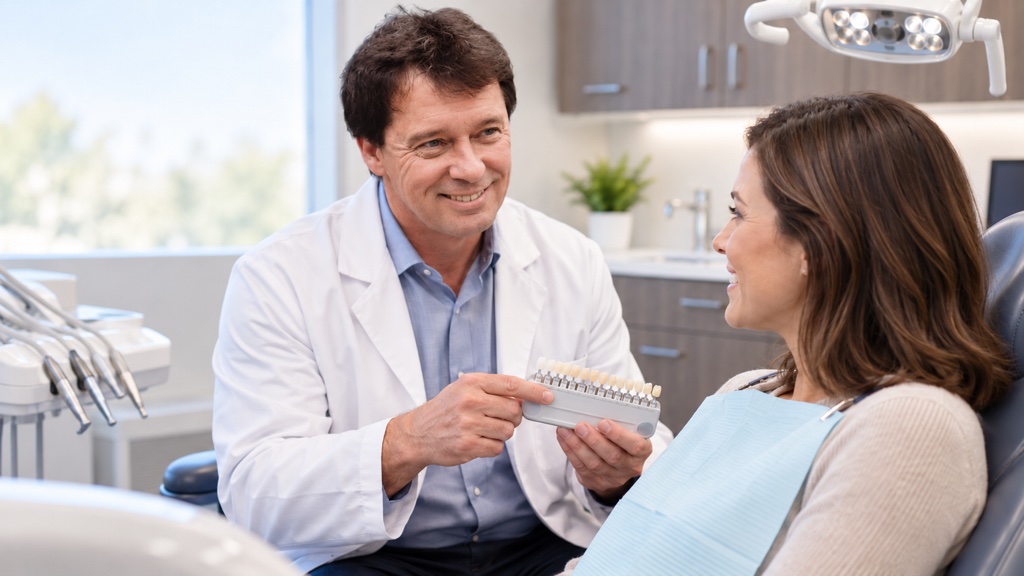
Professional whitening works best when it starts with an exam. Here is how we handle it at Johnstown Dental Care.
By Dr. Brian Walsh, DDS, Johnstown Dental Care
If you have been looking at your teeth in photos and wishing they were a few shades brighter, you are not alone. It is one of the most common questions I hear from patients in Johnstown.
Here is the short answer. Yes, we offer professional teeth whitening at Johnstown Dental Care, both in the office and with take-home kits. But I don’t start with a product. I start with an exam, because the right whitening plan depends on what is going on with your teeth, and some of that you simply can’t see in a mirror.
That first visit is what makes professional whitening safer and more predictable than anything you can buy off a store shelf.
Key Takeaways
- Johnstown Dental Care offers both in-office whitening and take-home whitening kits.
- Every whitening plan starts with an exam, so I can find the cause of the discoloration and check your teeth and gums first.
- Sensitivity is the most common side effect, and existing sensitivity, gum problems and crowns or fillings all change what I recommend.
- In-office whitening is the faster route; a take-home kit works more gradually. Both work well under a dentist’s care.
- Professional agents are stronger than over-the-counter products and are used under supervision, with your gums protected.
Why Do I Start With An Exam Instead Of A Whitening Product?
The American Dental Association advises talking with a dentist to find out whether whitening is right for you. An ADA spokesperson puts it plainly: see a dentist first, get a cleaning, and get the all clear before you whiten.
I agree, and here is why it matters in practice.
Whitening agents work on healthy enamel. If there is a cavity, an infection or gum recession, the same agent that brightens a healthy tooth can cause real irritation and sensitivity. Treating those problems first helps limit side effects, according to guidance published in the Journal of the American Dental Association.
There is a second reason. Sometimes a dark tooth isn’t a stain at all. A single darkened tooth can be the only visible sign of a problem inside it, such as an old injury or an abscess. Decay and leaking fillings can make teeth look darker too, and bleaching won’t fix decay. If we whitened over the top of that, we would be covering up a problem instead of treating it.
So before I recommend anything, I want to know what is causing the color you see.
What Does The Exam Check That You Can’t Judge On Your Own?
When you come in for a whitening consultation, these are the things I look at.
What is causing the discoloration. Surface stains from coffee, tea and red wine respond differently than color that comes from inside the tooth. Whitening can help with both, but knowing the cause tells me which approach will work and what result to expect.
Sensitivity you already have. If your teeth are already sensitive, we need to find out why before whitening. For those patients, the wrong whitening plan is something they would regret. Sometimes the answer is a gentler approach; sometimes it is to wait.
Your gums. Gum irritation is one of the two most common side effects of whitening. If your gums need care, we take care of that first so whitening goes more comfortably.
Crowns, fillings and veneers. Only natural teeth whiten. Crowns, veneers and tooth-colored fillings stay the color they are. If you have restorations on your front teeth, I want you to know that before you start, so the result looks even. In some cases, veneers or other cosmetic options are the better fit.
Pregnancy. Elective treatments like whitening are generally put off until after the baby is born. If you are pregnant or think you might be, let me know and we will plan around it.
This is what Sensible Dentistry means to me: making the decision that fits your teeth, not the one that sounds most impressive. You can read more about how I practice.
In-Office Or Take-Home: Which Whitening Option Fits You?
Once I know your teeth and gums are ready, we choose between two professional options. Both work well. The difference is mostly speed and comfort.
In-office whitening
This is the fastest route. The visit starts with a cleaning and polish. Then I protect your gums with a barrier, apply a professional-strength whitening agent, let it work, and rinse it away. Because the agent is higher in concentration than store-bought products, you see a difference sooner. Because it is applied under supervision, I can watch how your teeth and gums respond the whole time.
In-office whitening is a good fit if you want a noticeable change quickly, for a wedding, a new job or simply because you are ready.
Take-home whitening
A take-home kit lets you whiten gradually at home, using a professional product with clear instructions from our office on how to use it and how long to wear it. Dentist-supervised home whitening takes a few days to a few weeks.
Research comparing the two finds that sensitivity is often milder with at-home bleaching, which can make a kit the better choice for some patients. Many people also leave an in-office visit with a take-home kit for touch-ups later.
How we decide together
I’ll tell you which option I think fits and why: your timing, your teeth, how sensitive they are, and the result you want. If both would give you a good result, I’ll point you to the simpler one. The decision is yours, and there is never any pressure.
What About Store-Bought Whitening Strips And Toothpaste?
Plenty of people try a store product first. Here is what’s worth knowing.
Over-the-counter products use a lower concentration than we use in the office. They take longer to show results and are more likely to irritate your gums. Whitening toothpastes mostly remove surface stain and don’t change the color of the tooth the way bleaching does.
The bigger issue is that a store product can’t tell you why your teeth are discolored, whether a dark tooth needs attention, or whether your crowns will match afterward. Overuse can also damage enamel. That is the part an exam covers.
If you do use a store product, look for the ADA Seal of Acceptance, follow the directions exactly, and mention it at your next visit.
What Should You Expect After Whitening?
The most common side effect is temporary sensitivity. The ADA reports that up to two thirds of people notice mild to moderate sensitivity early in treatment, and it usually clears within a few days. If it happens, call us. Managing sensitivity is part of the care you get with professional whitening.
For the first 24 hours after treatment, avoid coffee, tea and red wine so the new color can settle. After that, keeping your teeth bright comes down to everyday habits: brushing and flossing daily, regular cleanings, not smoking, and going easier on the drinks and foods that stain.
How To Get Started
- Call our office at (740) 967-6046 and ask for a whitening consultation. We don’t take walk-ins, so calling first saves you a trip.
- Tell us what you are hoping for. A special event date, how quickly you want results, and any sensitivity you already notice all help me plan.
- Get your exam and cleaning. I’ll check your teeth, gums and any restorations and tell you what I see.
- Choose your option together with me. In-office, take-home or both, with a clear plan for comfort and results.
Frequently Asked Questions
Does Johnstown Dental Care offer teeth whitening?
Yes. Johnstown Dental Care in Johnstown, Ohio offers professional in-office whitening and take-home whitening kits. Every whitening plan starts with an exam with Dr. Brian Walsh, who checks the cause of the discoloration, your gums and any crowns or fillings before recommending the option that fits your teeth.
Is professional teeth whitening safe?
Whitening is generally considered safe when it is done by a licensed dentist or with ADA Seal products. The most common side effects are temporary tooth sensitivity and gum irritation. An exam first, gum protection during treatment and a dentist who can manage sensitivity are what keep professional whitening comfortable.
Can I whiten my teeth if they are already sensitive?
Possibly, but sensitive teeth need an exam first so the cause can be found. Some patients do well with a gentler take-home approach; for others, waiting is the better choice. That decision depends on what is causing the sensitivity, which is why it should be made with your dentist.
Will whitening change the color of my crowns or fillings?
No. Whitening only works on natural teeth. Crowns, veneers and tooth-colored fillings keep their original color, so a restoration on a front tooth may stand out after whitening. Your dentist should check for this before you start and talk with you about options that keep your teeth looking even.
Is in-office whitening better than a take-home kit?
Both work well under a dentist’s care. In-office whitening shows results faster, in a single visit. A take-home kit works more gradually and often causes milder sensitivity. The right choice depends on your timing, your teeth and how sensitive they are, which your dentist can assess at your consultation.
Brighter Teeth Start With The Right First Step
Whiter teeth are a reasonable thing to want, and in most cases they are very achievable. The difference between a result you love and one you regret is usually the step most people skip: finding out what your teeth need first.
That’s the step I take with every patient. If you are ready to brighten your teeth, call Johnstown Dental Care at (740) 967-6046 to schedule your whitening consultation.
The best whitening plan starts with someone looking at your teeth, not a product on a shelf.
Keep Learning
- Teeth Whitening at Johnstown Dental Care: our in-office and take-home whitening services.
- Cosmetic Dentistry: options when whitening alone isn’t the answer.
- Veneers & Laminates: for front teeth that whitening can’t change.
- Our Philosophy: how Sensible Dentistry guides every recommendation.
About The Author
Dr. Brian Walsh, DDS, owns Johnstown Dental Care in Johnstown, Ohio, where he provides family, restorative and cosmetic dentistry, including professional teeth whitening. He practices what he calls Sensible Dentistry: honest options, no pressure, and treatment decisions based on what will serve each patient best over the long term.
Other locations served:
- New Albany OH
- Sunbury OH
- Granville OH